
Portfolio Case Study
Enterprise On-the-Job Training Development Program
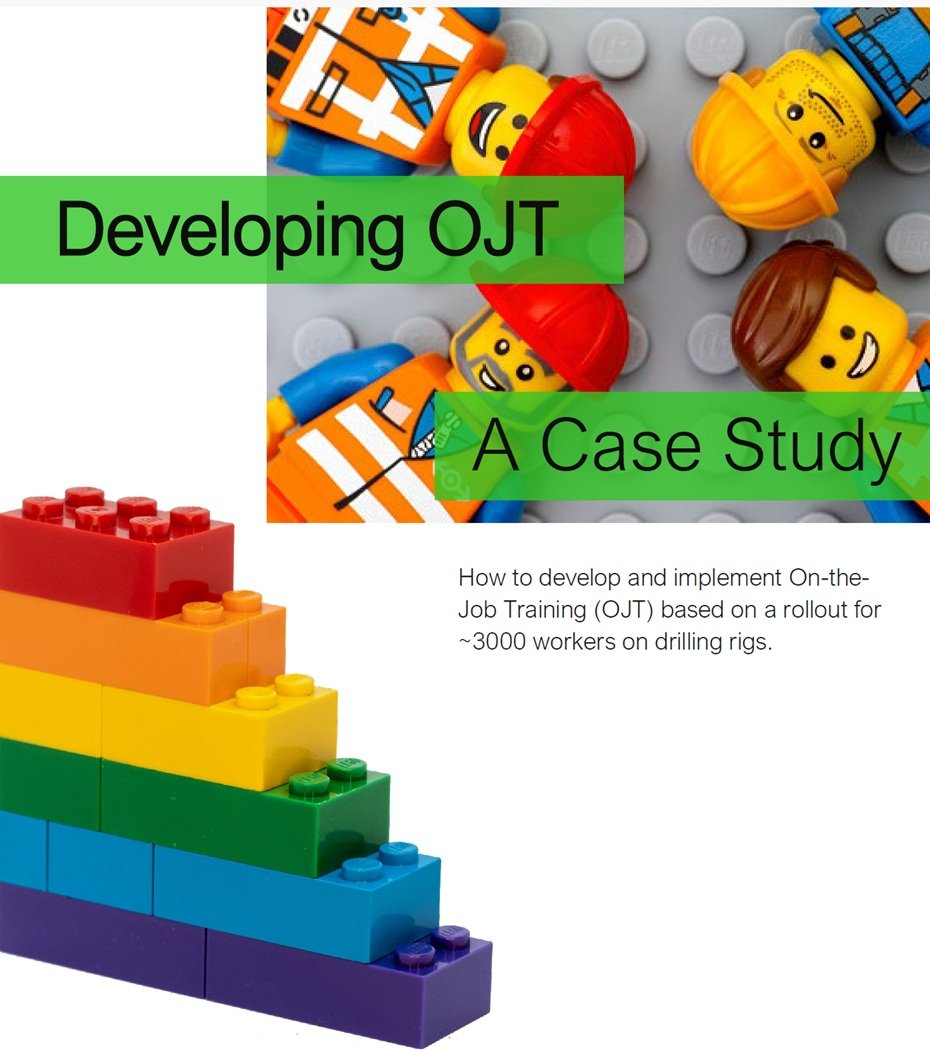
Led a multi-year initiative to build and implement structured On-the-Job Training for more than 3,000 employees across five core field positions on more than 100 onshore drilling rigs.
Selected excerpts are shown to protect proprietary content.
Key deliverables
See the solution early

Position-Based OJT
Converted role expectations into structured field learning and verification activities for each core position.
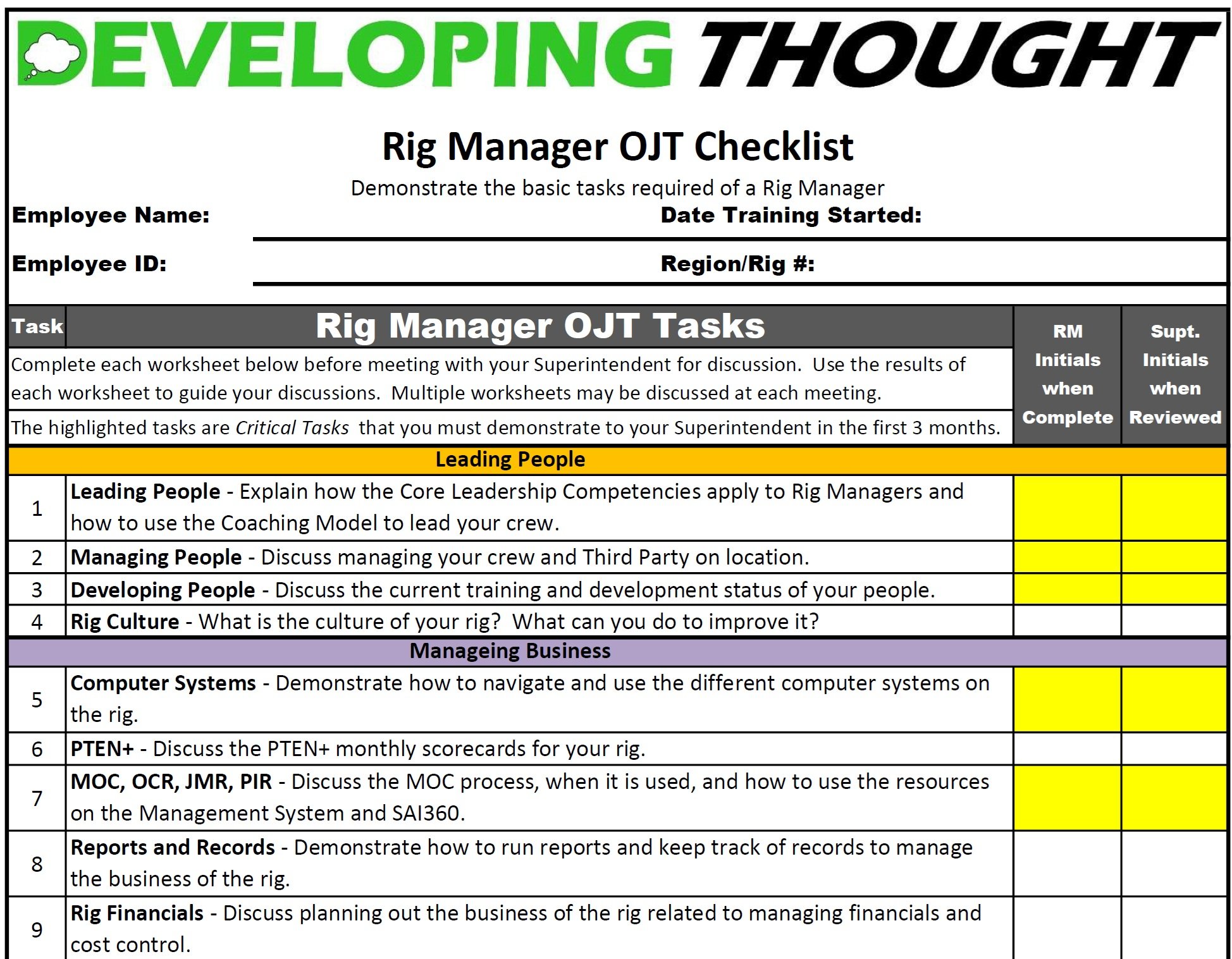
Supervisor-Level Development
Extended OJT through Rig Manager level with structured tasks, discussions, critical activities, and Superintendent verification.

Coaching & Reflection
Used guided reflection, manager discussions, follow-up, and crew feedback to develop leadership behaviors—not just technical tasks.
Reusable OJT Methodology
Turned the lessons from the rollout into a repeatable approach for building field-based training around job performance.
Featured OJT resources
From framework to field
These two resources show both sides of my approach to On-the-Job Training: the repeatable methodology I use to design performance-based OJT programs, and a case study showing how that approach was applied across a large, distributed field workforce.
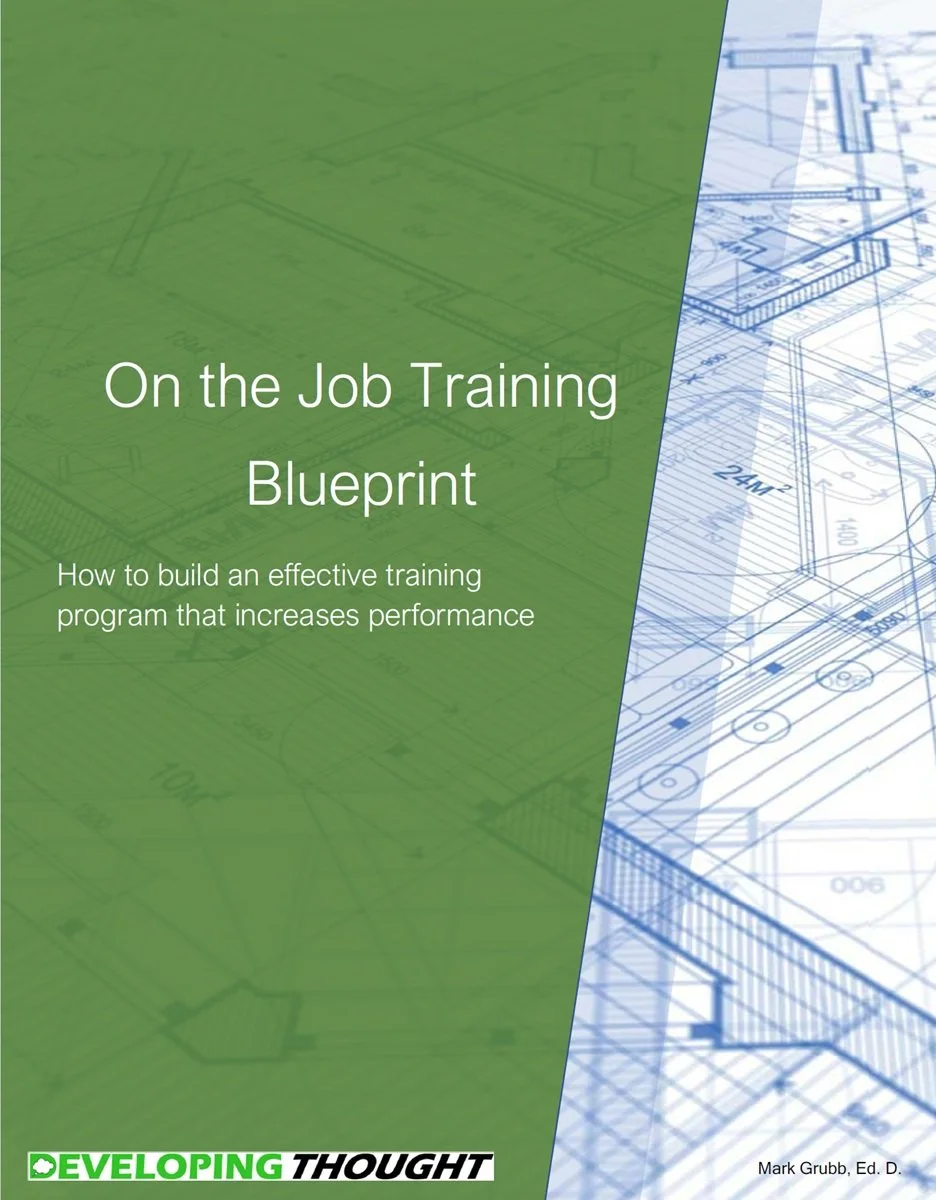
On-the-Job Training Blueprint
A practical six-step framework for determining whether OJT is the right solution, defining the work employees need to perform, establishing what good performance looks like, building a tracking process, and deploying and continuously improving the program.
Read the OJT Blueprint →
Developing OJT: A Case Study
A detailed look at the business problem, analysis, design decisions, field implementation, tracking approach, rollout, follow-up, and results of a large-scale OJT initiative.
Explore the Case Study →At a glance
Field workforce
Entry level through management
Distributed operations
Phased development & deployment
Observation & follow-up
The challenge
Turning field experience into a consistent development path
With thousands of employees working across a large, distributed rig fleet, development could not depend on informal knowledge transfer alone. Employees needed a consistent way to learn the work in the environment where performance actually happened, while supervisors needed a practical method to coach, verify progress, and prepare employees for greater responsibility.
The program also had to work around real operating constraints: tribal knowledge passed from employee to employee, different equipment configurations, limited connectivity, harsh field conditions, and a highly mobile workforce moving between rigs and supervisors.
Inconsistent Field Development
Without a structured process, the quality and sequence of On-the-Job Training could vary by rig, supervisor, and crew.
Career Progression
Employees needed clarity around what they were expected to learn and demonstrate before progressing to positions with greater responsibility.
Supervisor Accountability
Managers needed a repeatable way to coach employees, review progress, verify critical activities, and follow up on development.
Solution architecture
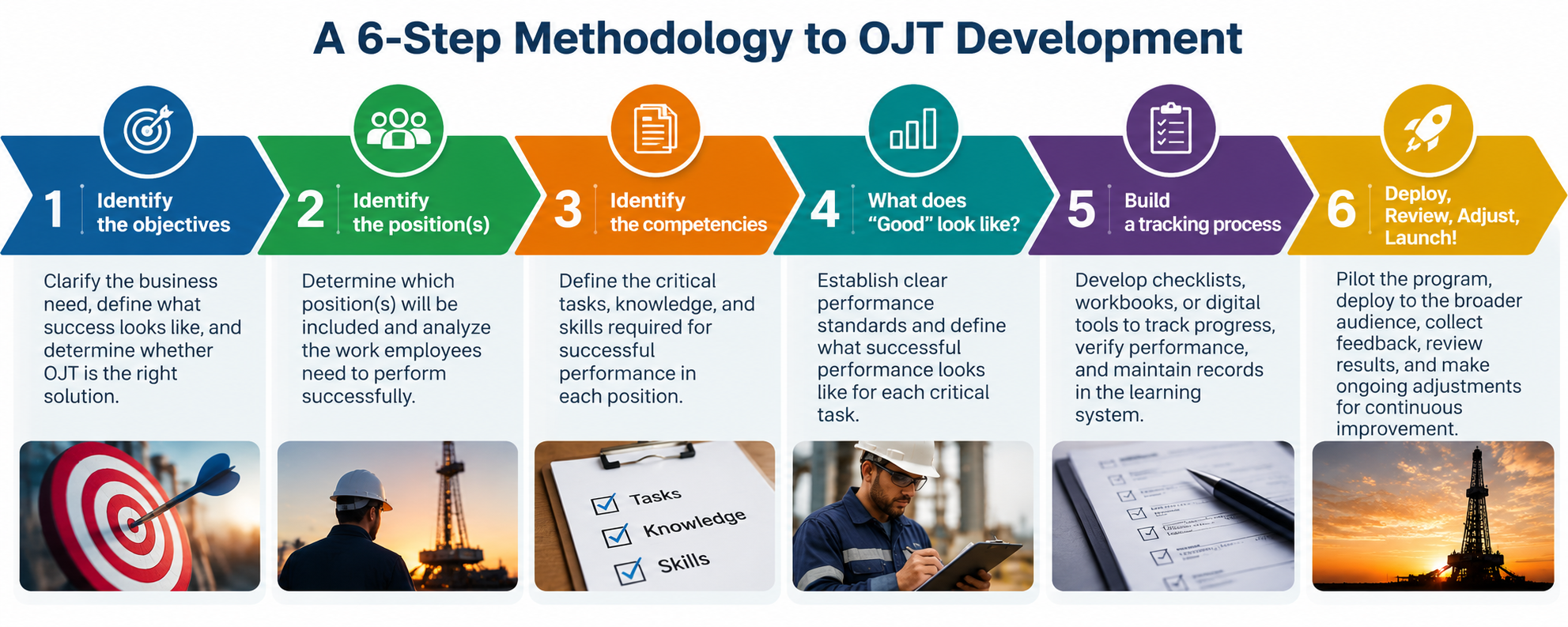
A repeatable six-step OJT methodology
The program organized development around position-specific work rather than relying on classroom training alone. The approach starts by confirming the business objective and whether training is actually the right solution, then moves from role and competency analysis through performance standards, tracking, deployment, review, and adjustment.
Implementation
From analysis to field deployment
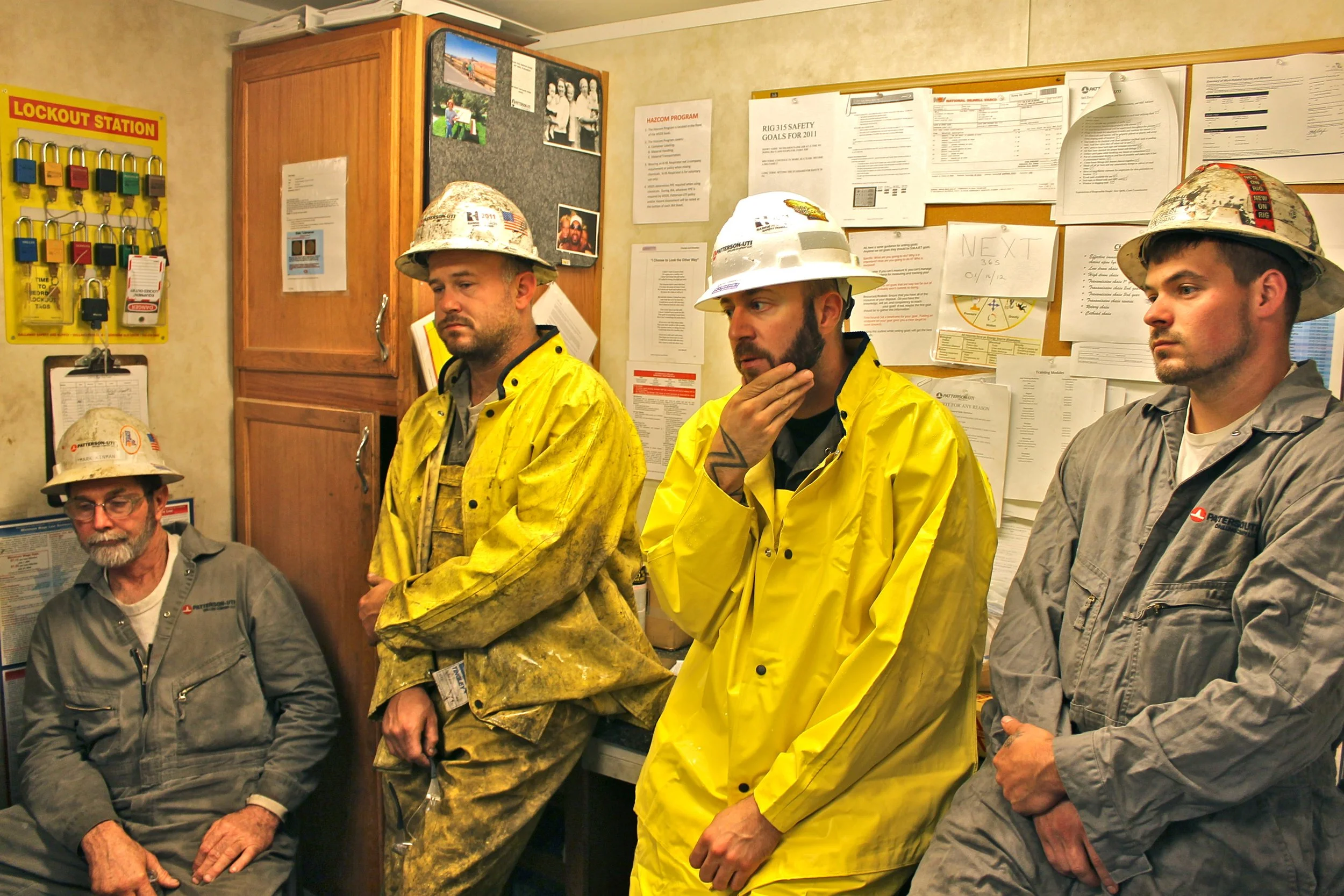
Role Analysis & SME Validation
I gathered job requirements from current and experienced jobholders, managers, and supporting functions, then worked with subject matter experts to define the tasks employees needed to perform and establish the correct performance standard for each task. Reviews could include Operations, HSE, Technical Services, HR, Legal, and other relevant authorities.
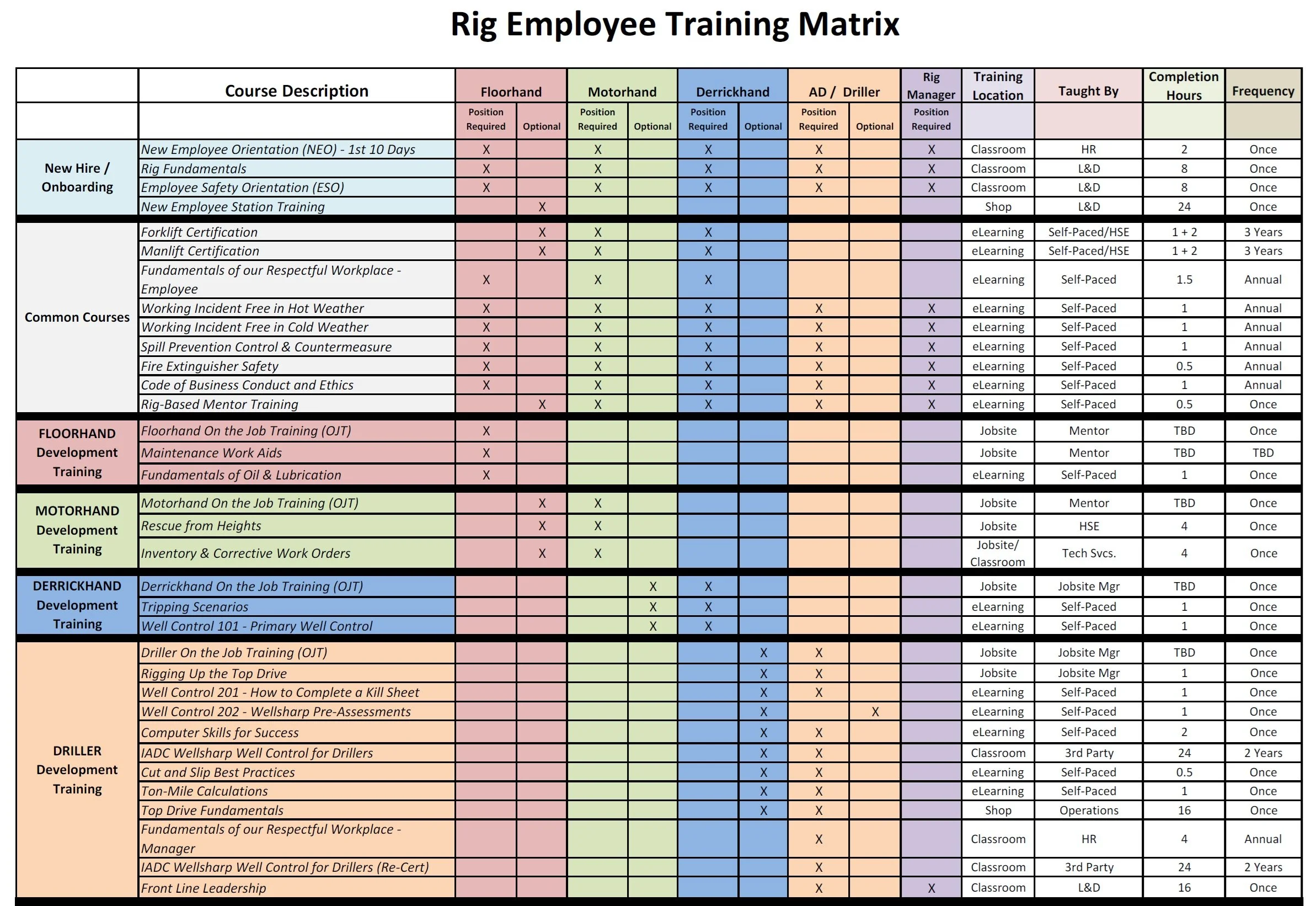
Structured On-the-Job Training
OJT materials translated the validated job requirements into practical field activities. Mentor preparation used a See One, Do One, Teach One approach so experienced crew members could coach employees through the work, while Rig Managers independently verified demonstrated performance.
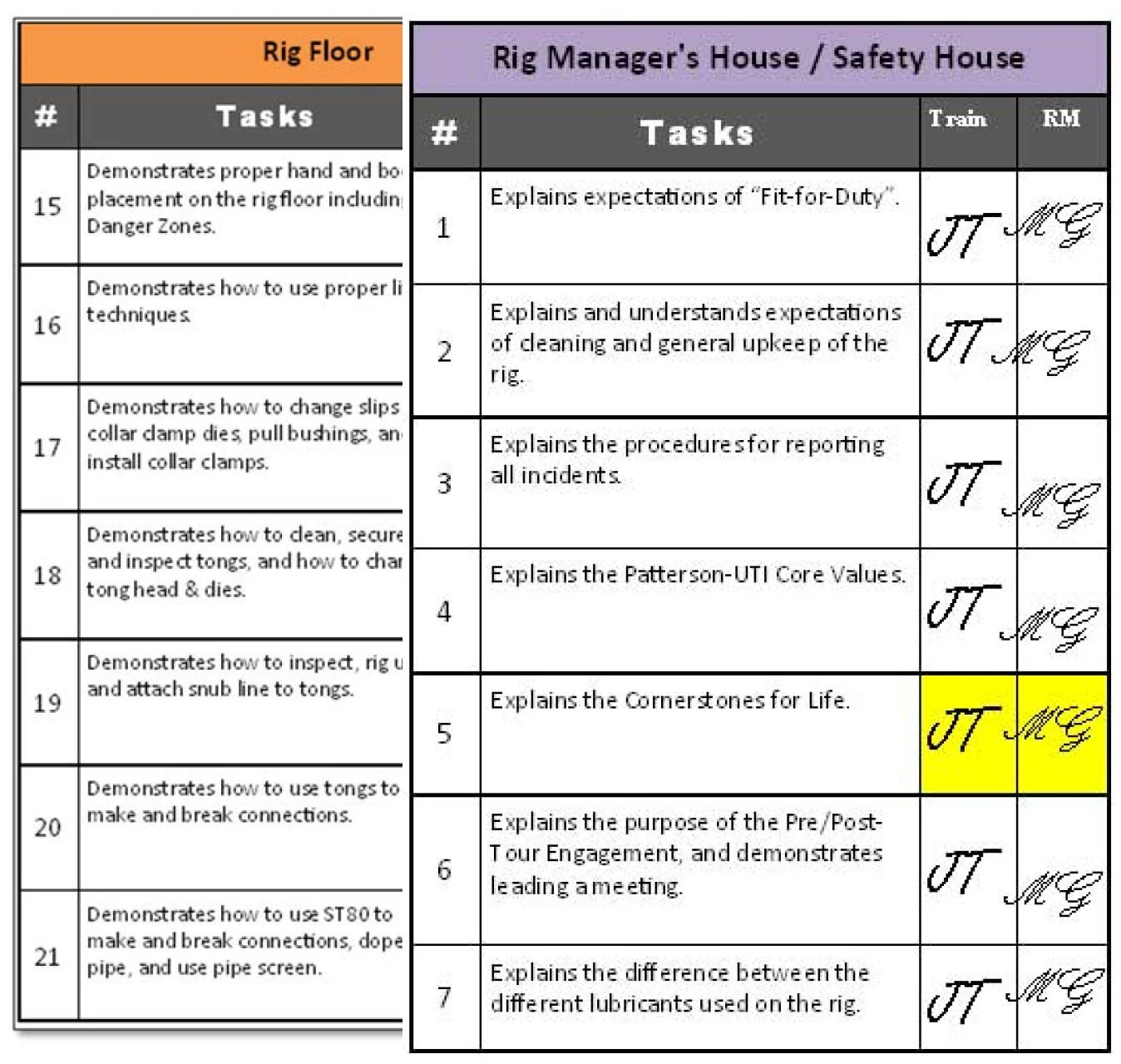
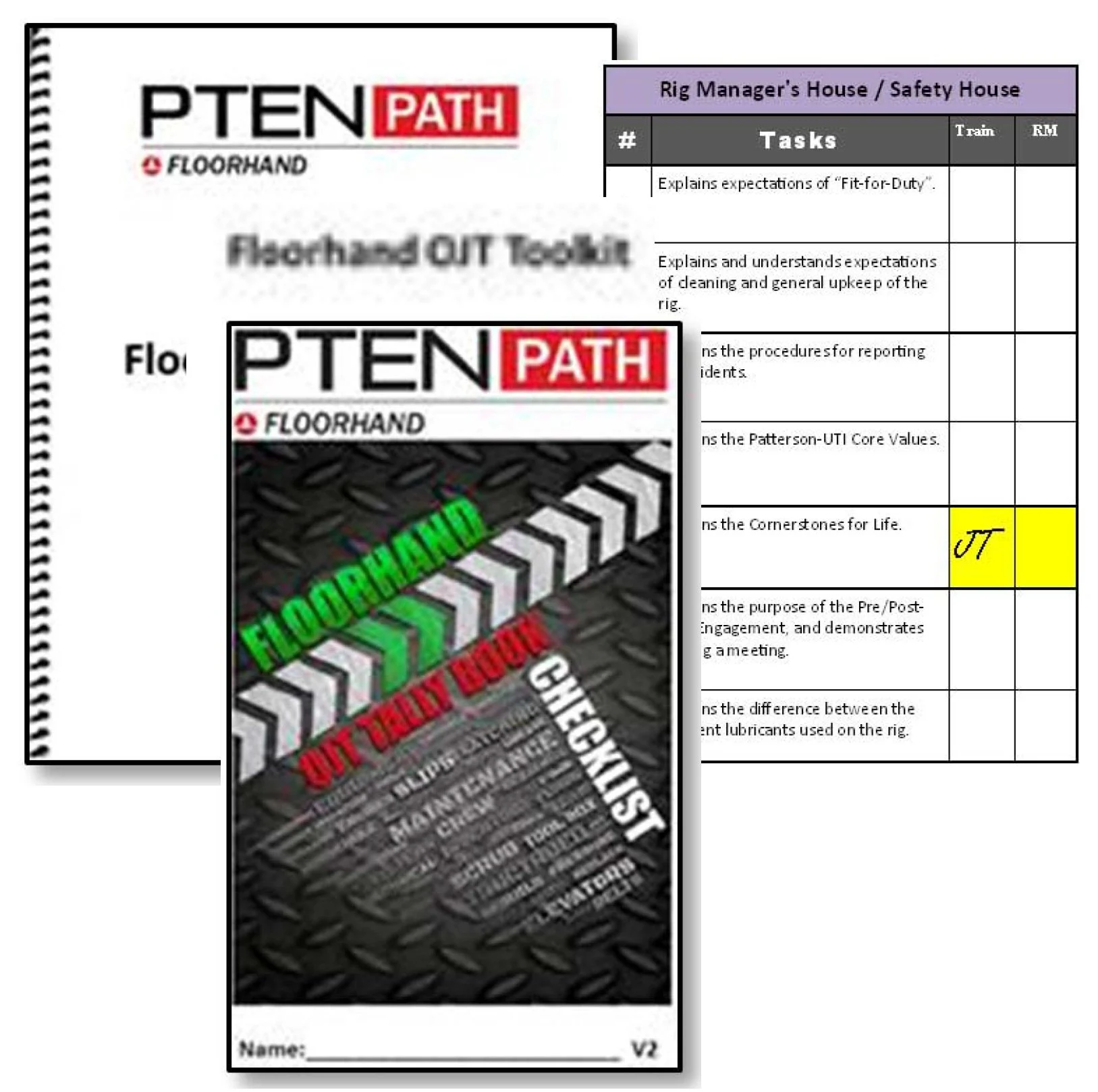
Field-Ready Tracking
The tracking approach was designed for the work environment. Crew members could train and initial tasks in the field, while Rig Managers verified performance before completion was recorded electronically. Critical tasks were prioritized on a shorter timeline, while full position requirements supported readiness for advancement.
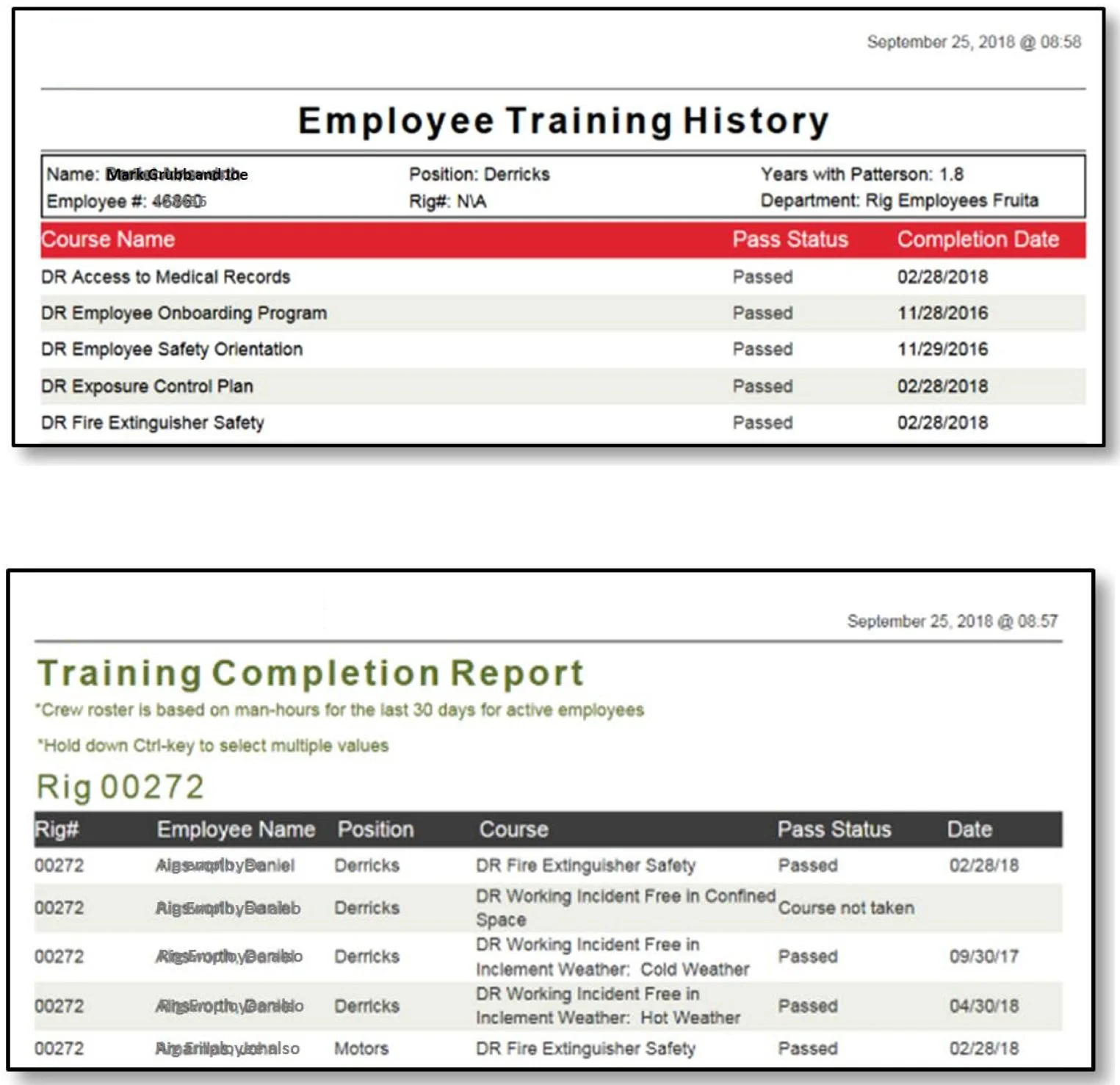
Phased Rollout & Continuous Improvement
The program was introduced by position, beginning with Floorhands. Rollout support connected mentor training, OJT toolkits, manager verification, electronic recording, training reports, and promotion requirements into a clear field process. Completion data, surveys, field observations, and manager feedback were then used to refine the program.
Rollout artifact
Turning the design into a field-ready launch
The initial Floorhand rollout included a concise walkthrough that translated the new OJT process into specific actions for employees, mentors, Drillers, and Rig Managers. It served as both an announcement and a practical change-management guide for implementing the program consistently on each rig.
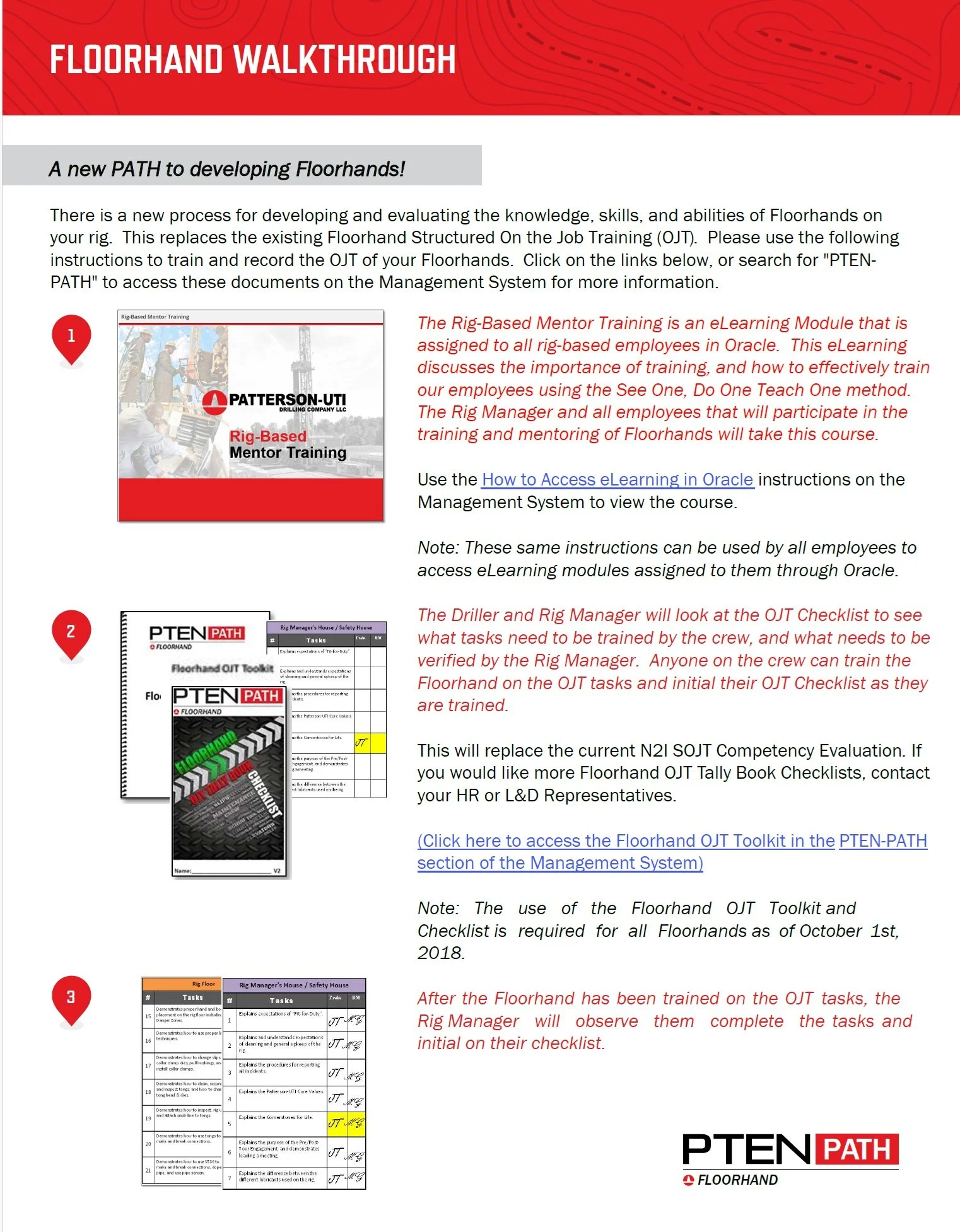
Initial position rollout
Floorhand OJT Walkthrough
The two-page guide showed how the new process worked from mentor preparation through field verification, electronic recording, reporting, and promotion readiness.
- Prepare the mentors: Rig-based employees supporting Floorhand development completed mentor training built around the “See One, Do One, Teach One” method.
- Separate training from verification: Crew members could train employees and initial completed learning activities; the Rig Manager observed and verified performance.
- Prioritize critical work: New Floorhands were expected to complete critical OJT tasks within three months and all position tasks within six months.
- Connect OJT to progression: Full position-task completion was required before eligibility for promotion to Motorhand, with the Rig Manager reviewing promotion requirements with the employee.
- Integrate the systems: Verified completion was recorded electronically, while training matrices and reports gave managers visibility into broader training requirements and completion.
My role
Leading the OJT development effort
I led the multi-year effort to design, develop, and implement structured On-the-Job Training across the core rig career path, combining instructional design with field operations, supervisor coaching, and performance verification.
- Led the analysis, design, development, deployment, and continuous improvement of position-based OJT for more than 3,000 field employees across five core rig positions.
- Started with the business problem and performance objective, distinguishing training needs from non-training performance barriers before designing the solution.
- Partnered with operations leaders, experienced jobholders, subject matter experts, and support functions to translate field responsibilities into validated learning and performance requirements.
- Supervised curriculum developers responsible for producing and maintaining training materials.
- Designed OJT around experiential learning and demonstrated job performance, using mentoring, field practice, manager verification, and structured follow-up.
- Designed a blended analog and digital tracking process that worked in harsh and low-connectivity environments while maintaining electronic completion records and exception reporting.
- Coordinated a phased rollout by position, beginning with Floorhands, and translated the new process into practical field guidance covering mentor preparation, manager verification, completion timelines, reporting, and promotion requirements.
- Built development expectations that supported cross-training, mentoring, and readiness for promotion.
- Extended the OJT model through supervisory and Rig Manager development, including critical tasks, reflection, coaching conversations, and Superintendent follow-up.
- Used surveys, reporting, field observations, and stakeholder feedback to evaluate the program and refine materials and processes.
- Supported deployment across a distributed fleet of more than 100 drilling rigs.
Impact
What employees said
Post-rollout surveys showed strong acceptance of the program, clear understanding of the process, and value in the field-based tracking tools.
78% Saw the Benefit
Rated the OJT program very beneficial or mostly beneficial.
85% Understood the Process
Reported understanding the OJT process very well or fairly well.
69% Valued the Field Tools
Rated the OJT tally books very useful or mostly useful.
It fills in the gaps with the question regarding ‘what is my job?’
The OJT program gives you hands on experience and helps you learn faster and efficiently.
It gives you the expected tasks of each position and allows you to see where you can improve.
Forces some experienced hand to take the time to teach rather than just expecting everyone to know.
Participant feedback emphasized clearer job expectations, hands-on learning, standardized critical tasks, stronger mentoring, and better preparation for promotion.
The rollout process also made accountability explicit: crew members supported training, Rig Managers verified demonstrated performance, critical tasks carried shorter completion timelines, and completion of the full position requirements was tied to advancement readiness.
The case study also documented increased employee retention and job satisfaction, along with reductions in turnover and the learning curve for employees moving into new positions.
Next Project
Field Performance Support
Examples of field-ready tools that turned complex procedures and technical knowledge into practical guidance employees could use at the moment of need.